

Designing Safe And Relevant Generative Chats For Math Learning In Intelligent Tutoring Systems Abstract Large language models (LLMs) are flexible, personalizable, and available, which makes their use within Intelligent Tutoring Systems (ITSs) appealing. However, their flexibility creates risks: inaccuracies, harmful content, and non-curricular material. Ethically deploying LLM-backed ITSs requires designing safeguards that ensure positive experiences […]

Students’ Perceived Roles, Opportunities, And Challenges Of A Generative AI-Powered Teachable Agent: A Case Of Middle School Math Class
Students’ Perceived Roles, Opportunities, And Challenges Of A Generative AI-powered Teachable Agent: A Case Of Middle School Math Class Abstract Ongoing advancements in Generative AI (GenAI) have boosted the potential of applying long-standing “learning-by-teaching” practices in the form of a teachable agent (TA). Despite the recognized roles and opportunities of TAs, less is known about […]
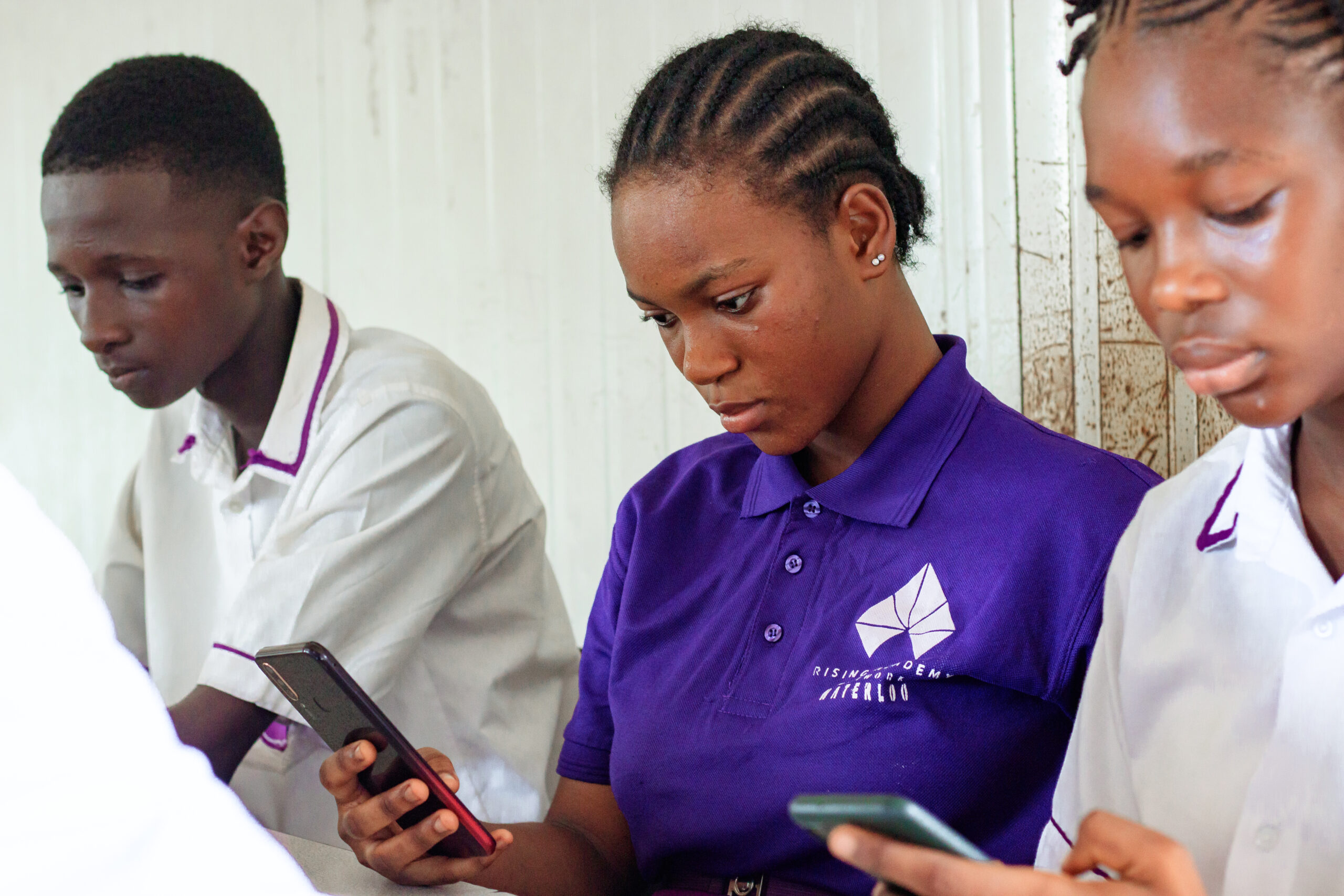
Effective And Scalable Math Support: Experimental Evidence On The Impact Of An AI- Math Tutor In Ghana
Effective And Scalable Math Support: Experimental Evidence On The Impact Of An AI- Math Tutor In Ghana Abstract This study is a preliminary evaluation of the impact of receiving extra math instruction provided by Rori, an AI-powered math tutor accessible via WhatsApp, on the math performance of approximately 500 students in Ghana. Students assigned to […]

Retrieval-Augmented Generation To Improve Math Question-Answering: Trade-Offs Between Groundedness And Human Preference
Interactive question-answering (QA) with tutors has shown to be an effective way for middle school math students to learn. While not all students have access to a tutor, large language models make it possible to automate portions of the tutoring process–including interactive QA to support students’ conceptual discussion of mathematical concepts. Some have questioned how LLM responses can be better aligned with a school’s curriculum. In this paper, Levonian and colleagues explore how retrieval-augmented generation (RAG) can help improve response quality by incorporating textbook information and other educational resources, while also identifying trade-offs of using RAG.