 Back to Research
This blog post is based on a column that originally ran in The 74 on Feb. 5, 2026.
In a landscape often dominated by sobering headlines about national test scores, a recent op-ed of math achievement on the National Assessment of Education Progress (NAEP) by L Burleigh, unearthed an underlying issue: the “math problem” in American classrooms isn’t actually about the numbers. It’s about a fundamental gap in how students are taught to think.
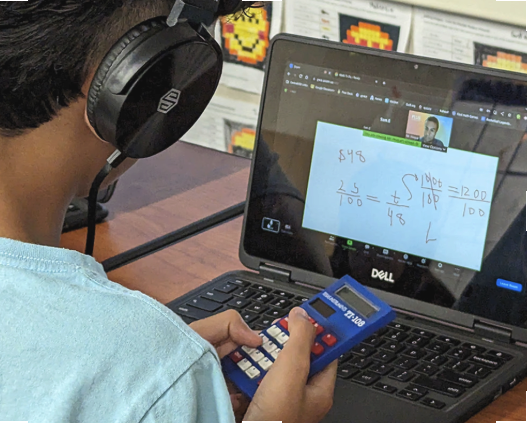
According to Burleigh, U.S. students are currently facing a “comprehension crisis.” For decades, the education system has leaned heavily on procedural fluency, or teaching students to follow a set of memorized steps to reach an answer. While this might help a student pass a specific quiz, that knowledge isn’t correctly applied in the context of a problem that doesn’t fit the expected pattern. When the “recipe” fails, the student is left without the conceptual tools to navigate the kitchen.
Engineering a Solution: The LEVI "Moonshot"
This is exactly where the Learning Engineering Virtual Institute (LEVI) steps in. Solving a problem this systemic requires more than just better textbooks; it requires a fundamental shift toward learning engineering.
LEVI was founded with an ambitious goal: to double the rate of middle school math progress, particularly for students in low-income communities. To reach this target, LEVI isn’t just looking for incremental improvements. We are supporting a cohort of innovators who are using learning engineering, rapid iteration, and AI to accelerate the rate of math learning.
From Drills to Dialogue: The Role of AI
A standout example of this work is LEVI grantee Eedi. Traditional math software often functions as a high-tech version of a flashcard by marking an answer “correct” or “incorrect” and moving on. Eedi, however, uses advanced AI to diagnose the why behind a wrong answer.
By identifying specific misconceptions, the platform acts less like a grader and more like a tutor. It asks guiding questions that force students to explain their reasoning, helping them build the mental scaffolding necessary to understand the “why” behind the “how.” This approach mimics high-dosage human tutoring at a scale that was previously impossible, directly addressing the comprehension gap identified in the original article.
Building for the Long Term
The takeaway is clear: if we want to move the needle on national math proficiency, we must stop treating math as a series of hurdles to jump over and start treating it as a language to be understood. By applying the rigors of engineering to the science of learning, LEVI and its teams are ensuring that students are building the critical thinking skills they will need for a lifetime.