
In response to declining middle school math outcomes, the Learning Engineering Virtual Institute (LEVI) launched in 2022 to dramatically improve student learning by harnessing the power of AI. Through multi-year grants, LEVI supports seven organizations in developing, scaling, and implementing AI-driven tools that boost student success.
Beyond funding, LEVI connects teams to a network of experts and partners who are dedicated to help teams accelerate impact and mitigate risks. This network of hubs provide the knowledge, resources, and support that teams needs to succeed.
These teams and hubs are committed to LEVI’s ultimate goal: Doubling the rate of middle school math progress for low income students by 2027.
To tackle this challenge, LEVI selected seven teams to develop innovative interventions aimed at achieving this ambitious goal. By harnessing the power of artificial intelligence, LEVI teams are at the forefront of change through their creative approaches to teaching and learning. Solutions include:
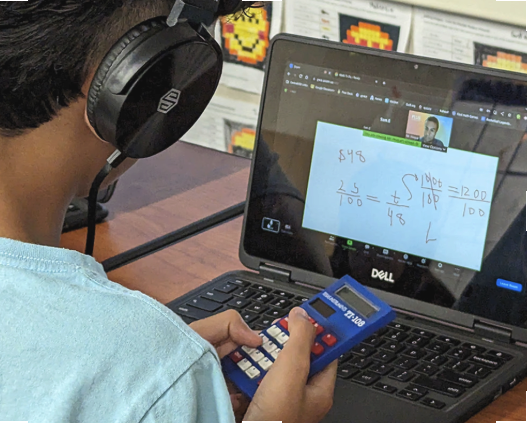
The University of Florida is building a scalable, AI-augmented environment that promotes active engagement to accelerate middle school students’ math learning. In the ALTER-Math program, students learn math by teaching an AI “tutee” to solve real-world problems using text, drawings, and voice. As they guide the AI, explain their reasoning, and correct AI’s mistakes, students strengthen their mathematical reasoning skills and deepen their conceptual understanding.
Learn More
Khan Academy’s Khanmigo is an AI-powered, chat-based tutor and set of activities, by combining the existing chat functionality with data about learners and classrooms. This results in students reaching mastery on both grade level skills and the foundational skills on which they have gaps, preventing them from being successful on grade level skills.
Learn More
Carnegie Mellon University’s PLUS Tutoring is a high-impact tutoring service that uses artificial intelligence to scale up one-on-one human tutoring during the school day. PLUS software connects to students’ math practice platform, tracks engagement and progress, and then matches highly skilled college tutors to the students who need help most, so support arrives at the right time.
Learn More
Eedi’s “misconception map” identifies a student’s current learning gaps and predicts future misconceptions before they occur. This predictive power allows Eedi to deliver a precise intervention, maximizing the impact of the support while making high-quality, education scalable and affordable. This core AI infrastructure is also used to help market-leading learning platforms and publishers create measurably effective learning experiences.
Learn More
Carnegie Learning’s MATHstream is an adaptive, interactive video streaming program for grades 6–12 where certified teachers—the MATHstreamers—deliver targeted instruction to students in a reaffirming, low-risk learning environment.
Learn More
The University of Colorado Boulder’s Human hybrid-AI tutoring (HAT) platform brings together the best of what human tutoring and AI have to offer. HAT supports critical components of tutoring work such as centering rich, collaborative math discourse and building caring relationships in order to improve tutoring processes and consequently student learning outcomes.
Learn More
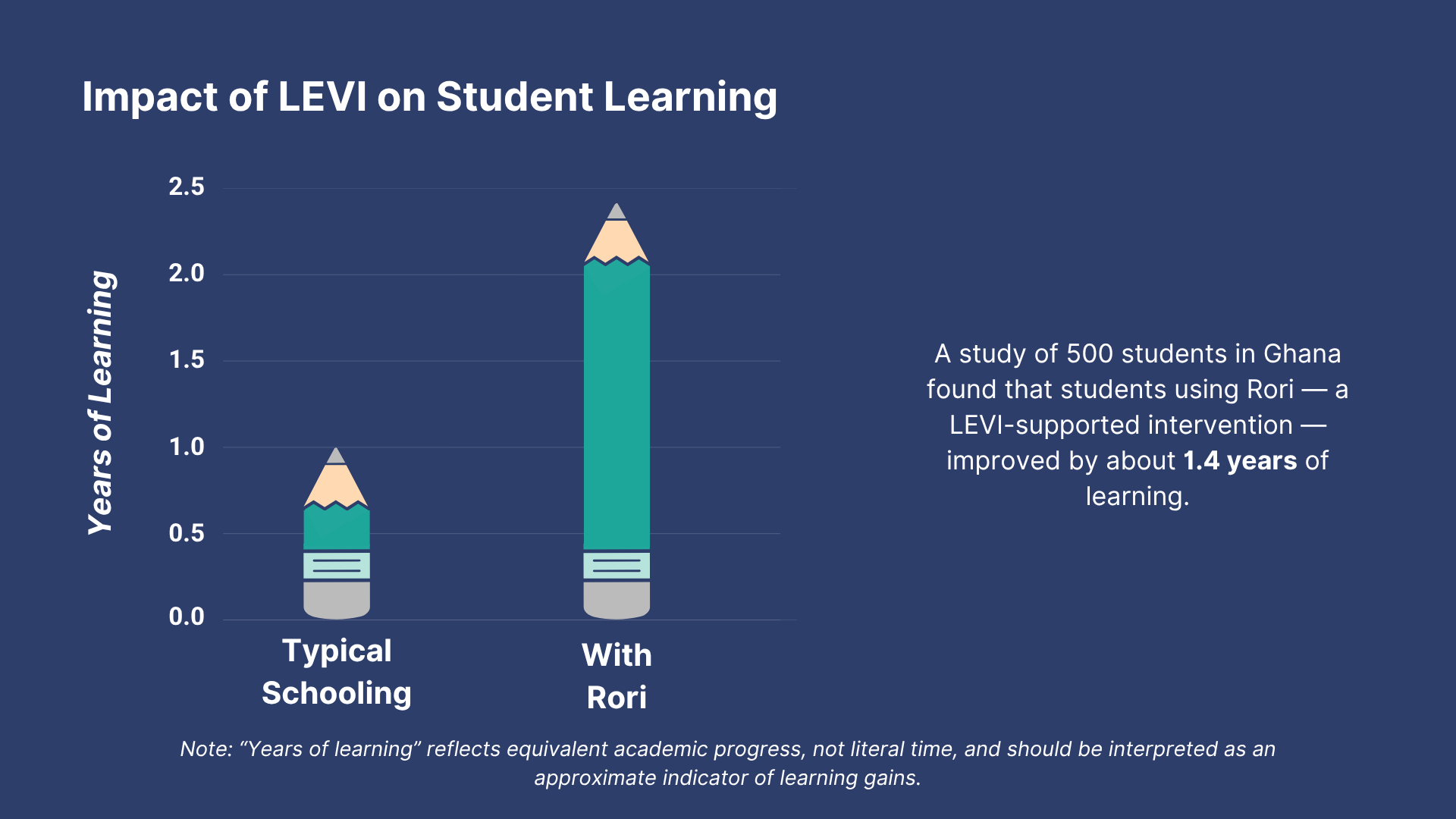
Rising Academies’ Rori brings foundational numeracy skills to low-literacy, low income students in Africa. 200 million children in Africa are not achieving minimum levels of proficiency in maths. High-quality, high-dosage tutoring is one of the best ways to improve outcomes, however, access is out of reach for the vast majority of children in Africa. Rori, a WhatsApp based AI chatbot tutor, designed for low resource environments, addresses that gap. As a multi-award-winning, evidence-based, and cost effective tool, Rori is bringing personalized, high-quality math instruction to the most underserved students.
Learn MoreLEVI and our teams are committed to setting and achieving ambitious goals. Within the first three years of the LEVI Math program, we’ve seen tremendous progress towards the moonshot goal to double the rate of middle school math progress. In addition, LEVI teams’ interventions have already reached a cumulative total of 353,268 students, with 194,000 of those students coming from low-income backgrounds.